Introduction
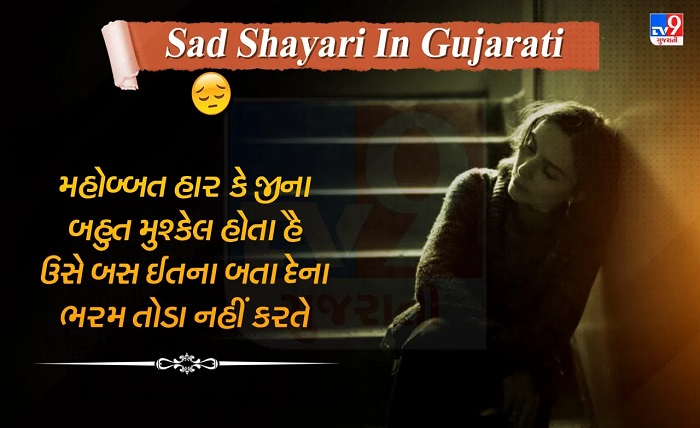
There is a unique, piercing beauty in the way sad shayari gujarati captures the essence of melancholy. Unlike any other form of poetry, Gujarati shayari has a raw, earthy quality that makes heartbreak feel like home. When you are drowning in the silence of a lost relationship or choking on the smoke of unspoken words, only sad shayari gujarati can give that pain a name. It is not just poetry; it is a therapeutic cry that echoes in the empty corridors of a grieving heart. Millions of people across Gujarat and the global Gujarati diaspora turn to sad shayari gujarati every single day to express emotions that they cannot voice themselves. Whether you are suffering from a breakup, the death of a loved one, or the simple loneliness of life, these verses become your closest friends. In this blog post, we will explore over 50 different examples of sad shayari gujarati, diving deep into love, separation, betrayal, and solitude. Every paragraph you read from now on will contain the healing power of sad shayari gujarati, ensuring you feel less alone in your suffering. Let us begin this emotional journey, because sometimes, the only cure for pain is to dress it in the rhythm of sad shayari gujarati.
The Heartbreak Anthems: Love and Separation in Sad Shayari Gujarati
When love walks out the door, it never leaves quietly; it leaves behind a trail of whispers and what-ifs. This is precisely where sad shayari gujarati becomes the ultimate language of the brokenhearted. The beauty of sad shayari gujarati lies in its ability to turn personal tragedy into universal art. For instance, consider this classic line: “Tara vagar ni raat, jaano raat nahi, / Dil ni dhadkan, haju aaj saat nahi.” (A night without you is no night at all; even my heartbeat doesn’t feel like seven beats anymore). Such sad shayari gujarati makes you realize that separation is not just physical; it is a biological rupture. When you read sad shayari gujarati about lovers who became strangers, you see your own reflection in every word. The metaphor of the “broken glass” is frequent in sad shayari gujarati — once shattered, you cannot unsee the cracks. Another profound piece of sad shayari gujarati goes: “Prem ma aagli raftaar, tooti alvida ni haar, / Aankh ma aasoo, dil ma thai gaya singaar.” (The speed of love broke the necklace of goodbye; tears became the only decoration in my eyes). This is the magic of sad shayari gujarati; it transforms a personal sob into a rhythmic masterpiece. If you have ever loved and lost, you know that no therapy works faster than reciting sad shayari gujarati under a dim streetlight at 2 AM.
Betrayal and Broken Promises: The Sharp Edge of Sad Shayari Gujarati
Not all heartbreaks come from death or distance; some come from the living who chose to lie. Sad shayari gujarati on betrayal is perhaps the most venomous and yet the most cathartic form of this art. When a promise is broken, the pain is double-layered, and sad shayari gujarati excels at dissecting that dual agony. One of the most recited pieces of sad shayari gujarati on deception goes: “Vaado karta vanar ma, tu toh gayo paar, / Miti ne pan tu madi nahi, aavi prem ni maar.” (You crossed the forest of promises, but you didn’t even find the soil; such is the death of love). Writing or reading sad shayari gujarati about betrayal is like squeezing a wound to let the infection out. Another powerful example of sad shayari gujarati on this theme is: “Hasato chhe visvaas, je karyo chhe vinaas, / Tari yaad ni jyot ma, hu ban gayo udaas.” (The trust that destroyed me is still laughing; in the light of your memory, I have become sadness itself). The irony in sad shayari gujarati often hits harder than direct expressions. When you chant sad shayari gujarati about a friend or lover who turned their back, you reclaim a part of your stolen dignity. Furthermore, sad shayari gujarati teaches us that betrayal is not the end; it is a brutal beginning. The most haunting sad shayari gujarati in this category says: “Tari bewafai no sila, hu aansu thi lav chu, / Pan tari yaad na mari sakto, evo hu dhav chu.” (I wipe your disloyalty with tears, but I cannot erase your memory — that is my foolishness). Indeed, sad shayari gujarati for betrayal is the dagger that heals.
Loneliness and Solitude: When Sad Shayari Gujarati Becomes a Companion
There is a specific kind of silence that fills a room when you are truly alone — it is heavy, loud, and suffocating. In those moments, sad shayari gujarati acts as a phantom companion who understands without judging. Solitude is a recurring muse in sad shayari gujarati, because loneliness is the baseline of the human condition. A beautiful example of sad shayari gujarati on loneliness is: “Ekla ma ekla, hu jeevish chu aankh bandh kari, / Sajan na bina, saans aave chhe bhari bhari.” (Alone among the alone, I live with closed eyes; without my beloved, every breath is a burden). Reading sad shayari gujarati in solitude makes you feel seen, as if the poet wrote those lines a century ago just for your Tuesday evening. Another masterpiece of sad shayari gujarati in this genre states: “Gali gali re mali, pan koi aayo nahi, / Aakhi bheed ma pan hu, eklo rahyo nahi.” (I wandered alleys, but no one came; in the whole crowd, I remained absent). This sad shayari gujarati brilliantly plays on the paradox of being invisible while physically present. When you whisper sad shayari gujarati to your shadow, you realize that loneliness is not the absence of people, but the absence of understanding. The ultimate form of sad shayari gujarati for solitude goes: “Hu aasmaan hu, pan taro chand nahi, / Hu sawaal hu, pan taro javab nahi, / Hu saagaro hu, pan tari pyas nahi, / Bas ek hu, taro koi khaas nahi.” (I am the sky, but not your moon; I am the question, but not your answer; I am the ocean, but not your thirst; I am just me, not your special one). That is the depth of sad shayari gujarati — it holds your hand in the dark.
Death, Loss, and Grief: The Eternal Sad Shayari Gujarati for Departed Souls
Some pains are irreversible, and the death of a loved one leaves a wound that time only pretends to heal. For such profound grief, sad shayari gujarati offers a sacred space to mourn. Unlike everyday sadness, grief demands a vocabulary of eternity, and sad shayari gujarati rises to that occasion beautifully. A traditional piece of sad shayari gujarati for a departed parent reads: “Mari maa na haath no haluvo, aaj pan yaad aave chhe, / Tena vagar nu ghar, swargthi pan bhaari laage chhe.” (The warmth of my mother’s hand still visits my memory; without her, even heaven feels like a burden). Writing sad shayari gujarati after a loss becomes an act of preservation, keeping the dead alive in ink. Another heart-crushing example of sad shayari gujarati for a lost friend is: “Chhataa tara hasva no avaaj, haju mari kaano ma, / Par tu toh khoya, tari yaad na bhoolu, evi aavi baano.” (The sound of your laugh still echoes in my ears, but you are lost; such an arrow of memory). Sad shayari gujarati acknowledges that grief is not linear; it is cyclical, like a tide. The most famous sad shayari gujarati on mortality says: “Ae duniya tamasha chhe, sab rahejo saavdhan, / Ek divas javanu chhe, aaje kem no ravan?” (This world is a spectacle; everyone be careful. You have to leave one day, so why not today?). While dark, this sad shayari gujarati forces us to confront impermanence. Reciting sad shayari gujarati at a funeral or a memorial is a common cultural practice in Gujarat because it validates the deepest human fear — that we all disappear. And so, sad shayari gujarati becomes an elegy, a eulogy, and a hug all at once.
Unrequited Love: The Silent Screams of Sad Shayari Gujarati
Loving someone who does not love you back is like bleeding where no one can see the wound. Unrequited love is the mother of all melancholy, and sad shayari gujarati has dedicated more verses to this theme than any other. The tragedy of one-sided love is perfectly captured in sad shayari gujarati because it involves zero blame and infinite pain. Consider this gem of sad shayari gujarati: “Tara dil ma mari jagya nahi, pan tari aankh ma aansu na aave, / Hu rakhu chu tari murti dil ma, pan tu mane na bhave.” (There is no space for me in your heart, yet your eyes don’t cry; I keep your statue in my heart, but you don’t like me). This sad shayari gujarati is painfully honest. Another beautiful sad shayari gujarati for those who love in silence goes: “Kehvani hato mane teri, pan kehvani reh gayi, / Dil ni vaat hu karu to tari vaari reh gayi.” (I had to tell you, but the telling remained; if I speak my heart, I will lose my turn). The frustration of waiting is a hallmark of sad shayari gujarati on unrequited love. Furthermore, sad shayari gujarati often uses the metaphor of a “mirror” for unreturned affection — you see everything, but you touch nothing. A powerful line of sad shayari gujarati states: “Hu prem ma hariyayu, pan tu jeet gayo, / Tari jeet ni koi kimat nathi, mari haar ma geet chhe.” (I lost in love, and you won; your victory has no value, but my defeat has a song). That is the irony of sad shayari gujarati — it finds poetry in failure. If you have ever loved someone who saw you as just a friend, or as nothing at all, you will find your diary pages in sad shayari gujarati. It does not offer solutions; it offers resonance. And sometimes, that is enough.
The Poetic Devices: Metaphors and Imagery in Sad Shayari Gujarati
Why is sad shayari gujarati so effective at making you cry? The answer lies in its masterful use of Gujarati folk imagery and devastating metaphors. Sad shayari gujarati does not merely state sadness; it paints it using colors from rural and urban Gujarati life. Common images in sad shayari gujarati include the “champeli” flower that wilts, the “vav” (stepwell) that dries up, and the “saanjh” (evening) that never ends. For example, a classic piece of sad shayari gujarati uses the monsoon ironically: “Varsad no mausam aayo, pan ghana varsad thaya nahi, / Tari yaad na vadal, haju aankh ma samaya nahi.” (The rainy season arrived, but it didn’t rain much; the clouds of your memory haven’t yet set in my eyes). Here, sad shayari gujarati inverts the joy of rain into a drought of tears. Another brilliant metaphor in sad shayari gujarati is the “broken flute” (toori), which represents a voice that can no longer sing love songs. Sad shayari gujarati also heavily uses “kanku” (vermilion) to symbolize faded marital happiness. One unforgettable line of sad shayari gujarati reads: “Mari kanku ni rekha, haju tari kandhe nahi, / Mari aarthi ni aasha, haju tari bandhe nahi.” (The line of my vermilion is no longer on your shoulder; the hope of my devotion no longer binds you). The rhythm of sad shayari gujarati often follows a 13-syllable or 11-syllable meter called “chhand,” which mimics the human heartbeat when sad. Furthermore, sad shayari gujarati uses alliteration extensively — repeating ‘k’ or ‘r’ sounds to create a sobbing effect when spoken aloud. If you analyze any popular sad shayari gujarati, you will notice the absence of anger and the presence of acceptance. That is the unique philosophical underpinning of sad shayari gujarati — it doesn’t fight pain; it elegizes it. So the next time you read sad shayari gujarati, pay attention to the silent spaces between words; that is where the real sadness lives.
How to Write Your Own Sad Shayari Gujarati: A Beginner’s Guide
You do not need to be a professional poet to create sad shayari gujarati that moves mountains. In fact, the best sad shayari gujarati often comes from raw, untrained pain. If you want to write your own sad shayari gujarati, start by identifying the specific flavor of your sadness — is it regret, longing, betrayal, or loneliness? Then, follow the basic structure of sad shayari gujarati: two or four lines (sher or rubaai), with the second line containing a twist or an emotional punch. For example, to write sad shayari gujarati on waiting, think of a concrete image: a clock, a door, a letter. A beginner’s sad shayari gujarati could be: “Sui ma sujati reh gayi, tari raah ma, / Haju muki ne tu aavi nahi, mari chaah ma.” (The needle kept piercing itself, waiting for your path; you still haven’t arrived in my desires). Notice how this sad shayari gujarati uses “sui” (needle) as a symbol of self-inflicted pain. The key rule of sad shayari gujarati is: show, don’t tell. Instead of writing “I am sad,” a good sad shayari gujarati would write “My shadow left me because I was too dark.” Also, use everyday Gujarati words — “pan,” “ne,” “chhe,” “to” — to keep the sad shayari gujarati authentic. Avoid overly Sanskritized or Urdu-heavy Gujarati; real sad shayari gujarati is spoken in kitchens and chai stalls. Finally, read your sad shayari gujarati aloud. Does it make your throat tighten? If yes, you have succeeded. Practice writing one sad shayari gujarati every night before sleeping. Over time, your sad shayari gujarati will flow naturally, and you will find that articulating pain reduces its weight. Remember, the greatest sad shayari gujarati ever written came from a broken heart that refused to stay silent. So pick up your pen, let the tears blur the ink, and write your own sad shayari gujarati. The world needs to hear your dard.
Conclusion
In a world that constantly tells us to “move on” and “stay positive,” sad shayari gujarati gives us permission to pause and feel. It does not trivialize our pain; it elevates it to an art form. Throughout this article, we have seen how sad shayari gujarati covers the entire spectrum of human suffering — from the sharp sting of betrayal to the slow rot of loneliness, from the finality of death to the endless waiting of unrequited love. Each time we recite sad shayari gujarati, we are performing an act of emotional archaeology, digging up buried feelings and laying them out in the sun. Sad shayari gujarati is not about wallowing; it is about witnessing. It validates that your broken heart is not a malfunction but a testimony that you loved deeply. The cultural resilience of sad shayari gujarati proves that Gujaratis, often stereotyped as business-minded and pragmatic, have an ocean of emotion beneath their commercial exterior. Whether you are sharing sad shayari gujarati on WhatsApp statuses, writing it in a private journal, or whispering it to a photograph, you are participating in a centuries-old tradition of healing through verse. So the next time sadness knocks on your door, do not hide. Open the door, offer it a chair, and read it some sad shayari gujarati. Because in the end, sad shayari gujarati teaches us that even in our most broken moments, we are still capable of creating beauty. And that, perhaps, is the greatest rebellion of all.
FAQs
1: What exactly is the difference between regular Gujarati poetry and sad shayari gujarati?
A: Regular Gujarati poetry (like that of Narmad or Umashankar Joshi) often covers themes of patriotism, nature, or spirituality. Sad shayari gujarati, however, is specifically focused on negative emotions — heartbreak, grief, loneliness, betrayal, and unrequited love. The tone of sad shayari gujarati is consistently melancholic, using specific imagery like “aansu” (tears), “virah” (separation), and “dard” (pain). Moreover, sad shayari gujarati is usually shorter (2-4 lines) and more rhythmic for easy recitation, whereas formal poetry can be longer. So if you are crying, you are likely reading sad shayari gujarati.
2: Can I use sad shayari gujarati for social media captions on Instagram or WhatsApp?
A: Absolutely. Sad shayari gujarati is extremely popular on social media platforms, especially WhatsApp statuses and Instagram stories. Millions of Gujarati users share sad shayari gujarati daily to express their mood without writing a long paragraph. However, always give credit to the original poet if you know them. Many anonymous sad shayari gujarati verses circulate freely, but for copyrighted works, attribution is ethical. Using sad shayari gujarati with a dark, aesthetic background image is a common trend. Just make sure the sad shayari gujarati matches your exact emotion — don’t post breakup shayari if you are just bored.
3: Is sad shayari gujarati only for romantic sorrow, or can it cover other types of sadness?
A: Not at all. While romantic sad shayari gujarati is the most popular, there is extensive sad shayari gujarati on parental loss, friendship betrayal, financial failure, existential dread, and even the sadness of migration. For instance, the Gujarati diaspora uses sad shayari gujarati to express desh-virah (longing for one’s homeland). There is also sad shayari gujarati about the death of a pet, the loss of a job, or the loneliness of old age. The keyword “sad” in sad shayari gujarati covers all forms of human unhappiness. So whatever hurts you, someone has written sad shayari gujarati about it.
4: Who are the most famous modern poets of sad shayari gujarati?
A: While classical poets like Kavi Kant and Kalapi wrote melancholic verses, modern sad shayari gujarati has been popularized by social media poets like Sagar Parmar, Rahul Vadhwani, and Viral Kavi. Moreover, many anonymous accounts on Instagram and Telegram post original sad shayari gujarati daily. In the literary world, the late poet Rajendra Shukla is known for his heartbreaking sad shayari gujarati. For beginners, following hashtags like #GujaratiShayari and #SadGujaratiShayari on social media will introduce you to hundreds of contemporary poets keeping this tradition alive.
5: Can writing sad shayari gujarati actually help with depression and anxiety?
A: While sad shayari gujarati is not a substitute for professional mental health treatment, art therapy research shows that expressive writing (including sad shayari gujarati) can reduce symptoms of mild depression and anxiety. Writing sad shayari gujarati helps externalize rumination — instead of cycling the same sad thoughts in your head, you put them on paper. This cognitive distancing provides relief. Many therapists of Gujarati-origin patients actually recommend reading or writing sad shayari gujarati as a coping mechanism. However, if your sadness persists for over two weeks or includes suicidal ideation, please consult a psychiatrist. Sad shayari gujarati is a companion, not a cure. But as a companion, it is unparalleled.