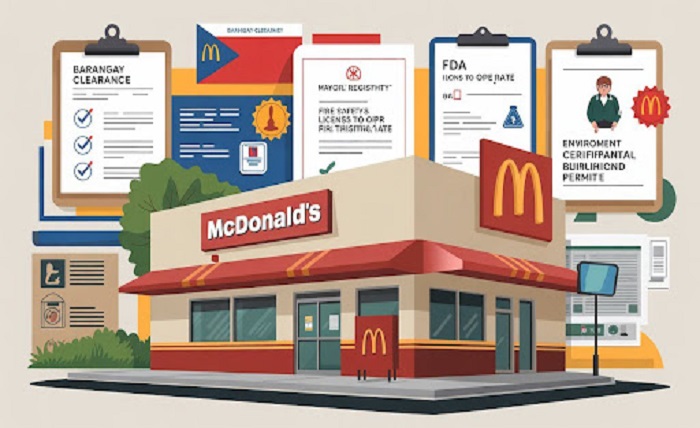
Opening a McDonald’s franchise in the Philippines represents a significant business opportunity, but it requires navigating a complex web of government requirements and clearances. Understanding the necessary documentation before starting your franchise journey can save time, money, and prevent costly delays. The regulatory landscape for food service establishments in the Philippines is comprehensive, designed to protect public health, ensure business legitimacy, and maintain community standards.
The franchise application process extends beyond securing approval from McDonald’s Philippines itself. Aspiring franchisees must obtain multiple government clearances from various agencies, each serving a specific regulatory purpose. These requirements ensure that your establishment meets safety standards, operates legally, and complies with local ordinances. Preparing these documents early in your planning phase demonstrates professionalism and accelerates the overall approval timeline.
Essential Local Government Clearances
Barangay Clearance
The Barangay Clearance serves as your foundational document when establishing any business in the Philippines, including a McDonald’s franchise. This clearance, issued by your local barangay council, certifies that your proposed business location complies with community regulations and that you have no pending issues with local authorities. Obtaining this clearance requires meeting with barangay officials, presenting your business plan, and demonstrating that your franchise will benefit the community without causing disruptions.
The application process for a Barangay Clearance typically involves submitting an application form, valid identification, proof of business location (lease contract or property title), and paying the required fees. The barangay council reviews your application to ensure your business aligns with zoning regulations and community development plans. Processing time usually ranges from one to three days, though this can vary depending on your location and the complexity of your application.
Barangay Clearance Certificate
Once approved, you’ll receive your Barangay Clearance Certificate, which serves as official documentation that your business has community-level authorization to operate. This certificate becomes a prerequisite for obtaining higher-level permits from municipal and city governments. The document includes essential details such as your name, business name, business address, and the specific purpose for which the clearance was issued.
The Barangay Clearance Certificate must be renewed annually, and maintaining good standing with your barangay throughout your business operation remains crucial. This certificate demonstrates to other government agencies that you’ve fulfilled grassroots-level requirements and have community support for your franchise. Many franchisees overlook this document’s importance, but it forms the foundation of your entire legal framework for business operation.
Mayor’s Permit (Business Permit)
After securing your barangay-level clearances, the next critical document is the Mayor’s Permit, also known as the Business Permit. This permit, issued by your city or municipal government, legally authorizes you to conduct business within that jurisdiction. For a McDonald’s franchise, this involves demonstrating compliance with local business regulations, zoning laws, and health standards specific to food service establishments.
The application requires multiple supporting documents including your barangay clearance, DTI or SEC registration, tax identification number, lease contract, fire safety inspection certificate, and sanitary permit. Processing takes approximately two to four weeks, depending on your local government’s efficiency and workload. The permit must be renewed annually, and penalties apply for late renewal or operation without a valid permit.
National Government Agency Requirements
Department of Trade and Industry (DTI) Registration
For sole proprietorship McDonald’s franchises, DTI registration establishes your business name and provides legal recognition at the national level. This registration ensures your business name is unique and not already claimed by another entity. The process involves searching for name availability, filing registration documents, and paying registration fees, typically completed within one to two business days.
If you’re establishing your franchise as a corporation or partnership, you’ll need Securities and Exchange Commission (SEC) registration instead. This more complex process involves filing articles of incorporation, bylaws, and other corporate documents. Many McDonald’s franchisees opt for corporate structure due to liability protection and potential tax advantages, though this requires more extensive documentation and higher registration costs.
Bureau of Internal Revenue (BIR) Registration
BIR registration and obtaining your Tax Identification Number (TIN) are mandatory before commencing business operations. This process includes registering your business, securing authorization to print receipts and invoices, and registering your books of accounts. The BIR requires submitting your DTI or SEC registration, barangay clearance, lease contract, and valid identification documents.
Your franchise must also obtain an Authority to Print (ATP) receipts and register your point-of-sale system with the BIR. These requirements ensure proper tax collection and documentation of all business transactions. Failure to comply with BIR regulations results in substantial penalties and potential business closure, making early and complete registration essential for franchise success.
Health and Safety Clearances
Food and Drug Administration (FDA) License to Operate (LTO)
The FDA License to Operate represents one of the most critical clearances for any food service establishment, including McDonald’s franchises. This license confirms that your facility meets national standards for food safety, sanitation, and operational practices. The application process involves facility inspection, review of food handling procedures, and verification of employee health certificates.
Preparing for FDA inspection requires ensuring your kitchen equipment meets specifications, implementing proper food storage systems, establishing waste management protocols, and training staff on food safety procedures. The inspection covers everything from refrigeration temperatures to handwashing facilities, ventilation systems, and pest control measures. Meeting these standards often requires significant investment in equipment and infrastructure before opening.
Sanitary Permit from Local Health Office
Beyond the FDA license, you must obtain a Sanitary Permit from your city or municipal health office. This permit focuses on local health standards and requires health certificates for all employees handling food. Each staff member must undergo medical examination and secure an individual health certificate, typically valid for one year.
The health office conducts separate inspections evaluating your facility’s cleanliness, waste disposal system, water supply safety, and overall sanitation practices. They examine food preparation areas, storage facilities, dining spaces, and restroom facilities to ensure compliance with health codes. Maintaining these standards throughout operation is essential, as random inspections can occur at any time.
Fire Safety Inspection Certificate (FSIC)
The Bureau of Fire Protection issues the Fire Safety Inspection Certificate after evaluating your facility’s fire prevention and suppression systems. McDonald’s franchises, given their kitchen operations involving cooking equipment and potential fire hazards, face stringent fire safety requirements. Your facility must include proper fire exits, extinguishers, sprinkler systems, smoke detectors, and emergency lighting.
The fire inspection assesses building materials, electrical wiring, kitchen equipment safety features, emergency evacuation plans, and staff fire safety training. Meeting these requirements often necessitates working with licensed fire safety engineers during your facility’s design and construction phases. The certificate requires annual renewal with follow-up inspections to ensure continued compliance with fire safety standards.
Environmental and Building Clearances
Environmental Compliance Certificate (ECC)
Depending on your franchise location and facility size, you may need an Environmental Compliance Certificate from the Department of Environment and Natural Resources (DENR). This certificate ensures your business operations won’t negatively impact the surrounding environment. The application involves submitting an Initial Environmental Examination (IEE) or Environmental Impact Assessment (EIA), depending on your project’s classification.
The DENR evaluates your waste management plans, wastewater treatment systems, air quality impact, and noise pollution potential. McDonald’s franchises must demonstrate proper disposal methods for cooking oil, food waste, and packaging materials. Implementing sustainable practices and environmental protection measures strengthens your application and demonstrates corporate social responsibility.
Building Permit and Occupancy Permit
Before constructing or renovating your franchise location, you must secure a Building Permit from your local government’s Office of the Building Official. This permit requires submitting architectural plans, structural designs, electrical layouts, and plumbing schematics prepared by licensed professionals. The building permit ensures your facility meets structural safety standards and building codes.
After construction completion, you must obtain an Occupancy Permit (Certificate of Occupancy) certifying that your building is safe for its intended use. Inspectors verify that construction followed approved plans and meets all safety standards. This final clearance is essential before you can legally operate your franchise and typically requires coordinating inspections from multiple departments.
Employment and Social Compliance
Social Security System (SSS) Registration
As an employer, you must register your McDonald’s franchise with the Social Security System and enroll all employees. This registration provides workers with social security benefits including sickness, maternity, retirement, and death benefits. Employers must remit monthly contributions for all covered employees and maintain accurate employment records.
The registration process requires submitting your business registration documents, list of employees, and completing SSS employer registration forms. Compliance with SSS regulations protects your employees and shields your business from penalties and legal complications. Regular audits ensure ongoing compliance with contribution and reporting requirements.
PhilHealth and Pag-IBIG Registration
Similar to SSS registration, you must register your franchise with PhilHealth (Philippine Health Insurance Corporation) and Pag-IBIG Fund (Home Development Mutual Fund). These agencies provide health insurance and housing benefits to employees, respectively. Registration involves submitting employer registration forms and enrolling all eligible employees within prescribed timeframes.
Maintaining compliance with these three agencies SSS, PhilHealth, and Pag-IBIG requires regular contribution payments, accurate reporting, and proper documentation. Many franchisees engage accounting firms or HR specialists to ensure seamless compliance with these requirements, avoiding penalties and protecting employee welfare.
Industry-Specific Requirements
Franchise Agreement and Documentation
Before pursuing government clearances, you must first secure approval from McDonald’s Philippines for your franchise application. This involves meeting their financial requirements, attending franchise orientation, and signing the franchise agreement. This agreement outlines operational standards, territory rights, training requirements, and ongoing support provisions.
McDonald’s corporate team guides franchisees through the government clearance process, providing checklists and documentation support. Their experience with Philippine regulatory requirements proves invaluable in navigating the bureaucratic landscape. Leveraging their expertise and established relationships with government agencies can significantly streamline your approval process.
Timeline and Strategic Planning
Sequential Processing Strategy
Obtaining all necessary clearances requires strategic planning and understanding which documents depend on others. Starting with your Barangay Clearance and Barangay Clearance Certificate enables you to proceed with municipal-level permits. Simultaneously, you can process national registrations like DTI/SEC and BIR while preparing your facility for various inspections.
Creating a comprehensive timeline that accounts for processing delays, inspection schedules, and potential resubmissions helps manage expectations and prevents frustration. Most franchisees should budget three to six months for completing all government clearance requirements, though complex situations may extend this timeframe. Beginning the clearance process during facility construction optimizes time and enables coordinated progress toward opening day.
Conclusion
Successfully opening a McDonald’s franchise in the Philippines requires diligent attention to government clearance requirements at local, municipal, and national levels. From securing your foundational Barangay Clearance and Barangay Clearance Certificate to obtaining specialized permits for food safety, fire protection, and environmental compliance, each document serves a vital regulatory purpose. Understanding these requirements early in your franchise planning process enables strategic preparation, reduces delays, and demonstrates your commitment to legal and ethical business operation.
The investment in time and resources to secure proper clearances protects your business from legal complications, establishes community trust, and positions your franchise for long-term success. Working closely with McDonald’s corporate support team, engaging professional consultants when needed, and maintaining organized documentation throughout the process ensures you meet all regulatory requirements efficiently. Your compliance with these government standards not only fulfills legal obligations but also reinforces the McDonald’s brand reputation for quality, safety, and community responsibility in the Philippine market.